
Biomass
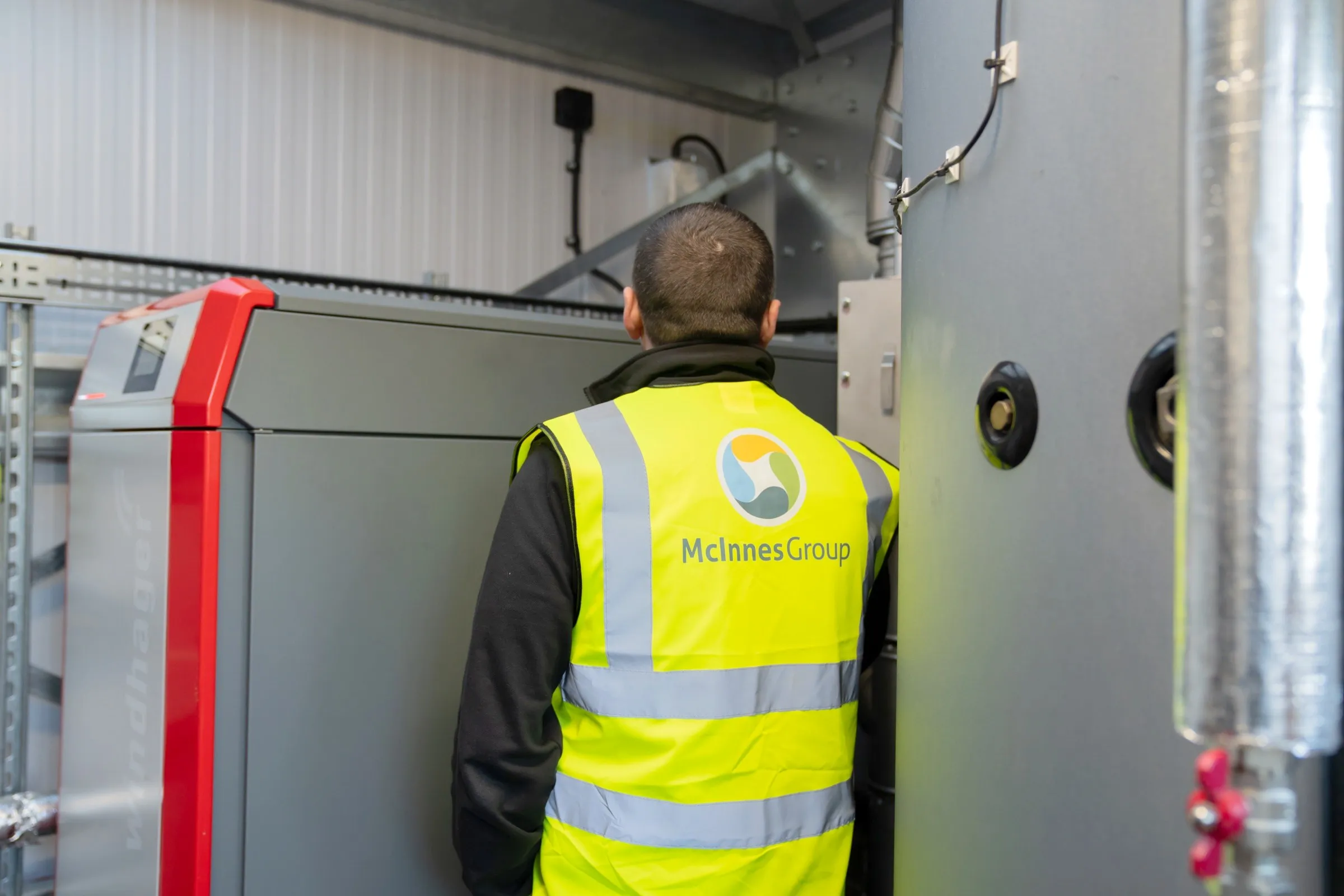
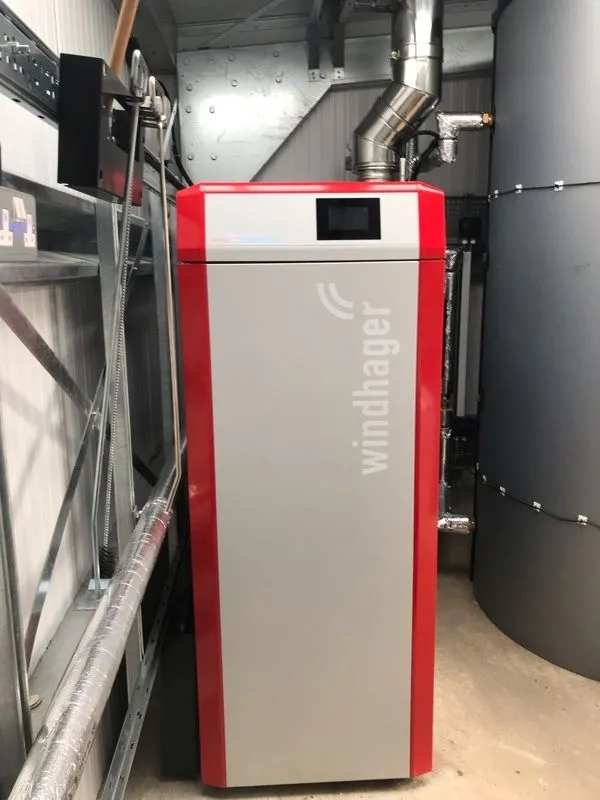
Windhager log, pellet and wood chip boilers — designed into the whole system.
Biomass is the right answer in the right place — rural properties with a fuel source on hand, off-gas sites with high winter demand, community buildings where automatic operation matters. Windhager UK is our preferred manufacturer and the technology we know best.
What we install
Three boiler types, sized to the property.
Log gasification. Twin-stage combustion that fully gasifies the wood for very high efficiency — typical for rural properties with a long-standing log supply, or owners who prefer the hands-on element of a daily fire-up. Often paired with a thermal store so the boiler runs hard for a short window and the store carries the house through the rest of the day.
Pellet. Fully automatic — the boiler feeds itself from a hopper. Best fit for owners who want renewable heat without the daily input log boilers ask for, and for community / commercial sites where automatic operation is a hard requirement.
Wood chip. Larger commercial and agricultural scale. Fuel cost can be lowest of the three where chip supply is local, but the plant room footprint, fuel storage and delivery logistics all need designing in from the start.
How biomass fits the system
We routinely combine biomass with other technologies.
Biomass works best as part of a designed system. A pellet or log boiler paired with solar PV and battery covers a property's heat and electrical demand year-round; solar thermal pairs naturally too, taking over the summer hot-water load so the boiler can rest entirely between heating seasons. Pairing biomass with an air source heat pump gives a hybrid set-up where the heat pump handles shoulder-season demand efficiently and the biomass takes over for the cold weeks — with the control system switching between them automatically.
Our Fortrose case study is the live example: a Windhager log gasification boiler installed first, then a year later an air source heat pump bolted into the existing Windhager MES control manifold via direct collaboration with Windhager UK. Automatic switchover. Remote access. One control story.
How we work
Six steps, from survey to first burn.
Biomass installs run through the same six-stage process as every job we do — with the plant room, fuel store and delivery access all designed in from the first survey, and the boiler commissioned and handed over by the same team that designed it.
-
Step 1
Free estimate
A no-obligation estimate based on what you tell us about the property and what you want the system to do. No call-out fee, no pressure.
-
Step 2
Pre-start survey
Once an estimate is accepted, we carry out a proper site survey before any installation — measuring the building, modelling heat loss or generation, and checking the existing services.
-
Step 3
Full proposal
Issued after the survey. Clearly flags any changes from the estimate, with the reasoning. Fully transparent up front — no mid-job surprises.
-
Step 4
Installation
Carried out by fully qualified engineers at every stage. We programme the schedule with you and keep disruption to the building proportionate.
-
Step 5
Detailed handover
On every job. You leave the handover knowing exactly how the system works, what every control does, and where to find your paperwork.
-
Step 6
First-year monitoring & optimisation
We remotely monitor every system we install and optimise it through the first year — tuning for efficiency and comfort as you live with it through every season.
Why consider it
What biomass does well.
- Serious heat output for big, hard-to-heat buildings
- Runs on logs, pellets or chip — a renewable, local fuel
- Low running costs where fuel is on hand locally
- Hybridises with a heat pump — automatic switchover
- Windhager controls with remote access built in
- Costs laid out clearly at survey before you commit
Best suited to
The properties where it pays back.
- Rural, off-gas properties with a log or chip supply on hand
- Older stone buildings with high winter heat demand
- Community buildings where automatic operation matters
- Estates and farms with their own timber supply
- Commercial and agricultural sites at wood-chip scale
Hear it from the customer
The Fortrose biomass install, in their own words.
A Windhager log gasification boiler on the Black Isle, later joined by a heat pump on the same controls — read the full case study.
Costs & grants
Funding routes, explained.
Biomass costs vary widely with boiler type, fuel store size and the plant room work needed. A typical automated pellet system lands around £11,000–£19,000 installed, simpler log boilers from around £6,000, and complex systems with buffer tanks and fuel stores can reach £25,000–£30,000; commercial wood-chip projects are quoted per project. Every survey lays the numbers out clearly before you commit.
On the funding side: the Home Energy Scotland grant and loan can cover a domestic automated pellet boiler where a heat pump is shown to be unsuitable for the property (an adviser or installer letter evidences this — we help with that); commercial / community projects often qualify under CARES, the SME Loan + Cashback, or Public Sector Energy Efficiency Loans. We coordinate the technical documentation those bids need.
Why McInnes Group
The same team, start to finish.
- Surveyed, designed and project-managed in-house
- Direct working relationship with Windhager UK
- Plant room, fuel store and controls designed as one system
- Remote access to the controls after handover
- Locally based, locally responsive aftercare
- MCS-certified installation for funding eligibility
Frequently asked
Biomass questions, answered honestly.
Log, pellet or wood chip — which one suits my property?
Log gasification suits rural properties with a long-standing log supply and owners who don’t mind a daily fire-up — it usually pairs with a thermal store so one hard burn carries the house through the day. Pellet boilers feed themselves from a hopper, so they suit anyone who wants renewable heat without daily input, and community or commercial sites where automatic operation is a hard requirement. Wood chip is larger commercial and agricultural scale, where a local chip supply can make it the cheapest fuel of the three. The survey settles it — boiler type, fuel store and plant room are designed together.
Do I need a buffer tank or thermal store?
Log gasification boilers are almost always designed with a thermal store: the boiler runs hard for a short window and the store carries the heat through the rest of the day. Pellet systems modulate more finely, but many still benefit from a buffer. It’s a sizing decision we make at survey, and the tank’s space requirement is designed into the plant room from the start.
Can biomass really work alongside a heat pump?
Yes — and we’ve built it. At our Fortrose install a Windhager log gasification boiler was joined a year later by an air source heat pump on the same Windhager MES control manifold, set up in direct collaboration with Windhager UK. The controls switch between the two automatically: the heat pump handles shoulder-season demand efficiently, and the biomass takes over for the coldest weeks.
What does a biomass boiler cost?
It varies more than any other technology we install, because the boiler type, fuel store and plant room work differ so much between properties. As a guide: a typical automated pellet system lands around £11,000–£19,000 installed, simpler log boilers start from around £6,000, and complex systems with buffer tanks and fuel stores can reach £25,000–£30,000. Commercial wood-chip projects are quoted per project. Every survey lays the numbers out clearly before you commit.
Is there grant funding for biomass?
Sometimes. The Home Energy Scotland grant and loan can cover a domestic automated pellet boiler where a heat pump is shown to be unsuitable for the property — an adviser or installer letter evidences that, and we provide the technical documentation. Commercial and community projects often qualify under CARES, the SME Loan + Cashback, or Public Sector Energy Efficiency Loans. You make the application; we supply the technical evidence it needs.
Pairs well with
Worth combining.
Air source heat pumps
The Fortrose model: the heat pump carries the milder months efficiently, the biomass takes over for the cold weeks — one control system switching between them automatically.
Read more →
Solar PV & battery
A biomass boiler covers the property's heat; panels and a battery cover its power. Rural properties often do both in one project.
Read more →
Get in touch
Tell us about your project.
We'll be in touch within one working day. No call-out fee, no obligation.
Thanks
We'll be in touch within one working day.
If it's urgent, call us on 01463 231 423 — Monday–Friday, 09:00–17:00.
Prefer to talk? Call 01463 231 423 or email info@mcinnesgroup.co.uk.