
Case study · Community building
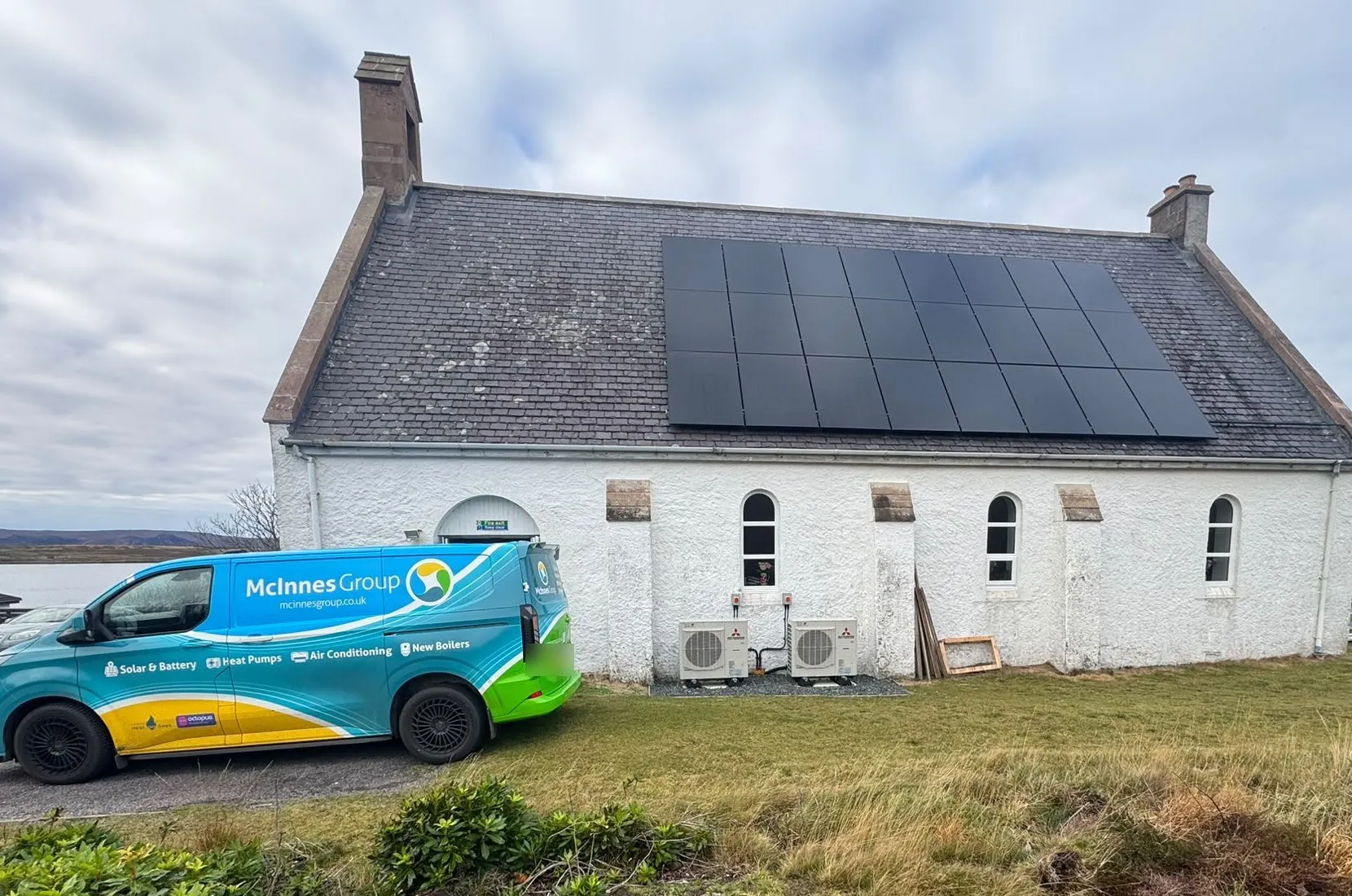
A warm hall for Wester Ross: air-to-air heating, solar and batteries at Aultbea Community Hub.
Aultbea's former Church of Scotland building is now the village's community hub, and it needed heating that could warm a tall, open hall quickly without running up a big electricity bill. We fitted a Mitsubishi Heavy Industries air-to-air heating system in the hall, plus two solar PV systems on the roof, each with its own GivEnergy inverter and battery, so the hub makes and stores much of its own power.
- Customer
- Aultbea Community Hub
- Location
- Aultbea, Wester Ross
- System
- 2 × Mitsubishi Heavy Industries air-to-air units · 24-panel 10.8 kWp solar PV · 2 × GivEnergy inverters and batteries
- Installed
- January to February 2026
The building
A village kirk with a second life as the community's living room.
Aultbea Community Hub is a community charity set up in 2018 to give the villages around Loch Ewe a place to meet. It took on the former Aultbea Church of Scotland building, opposite Isle View Care Home, and runs it as a hub for local groups and events.
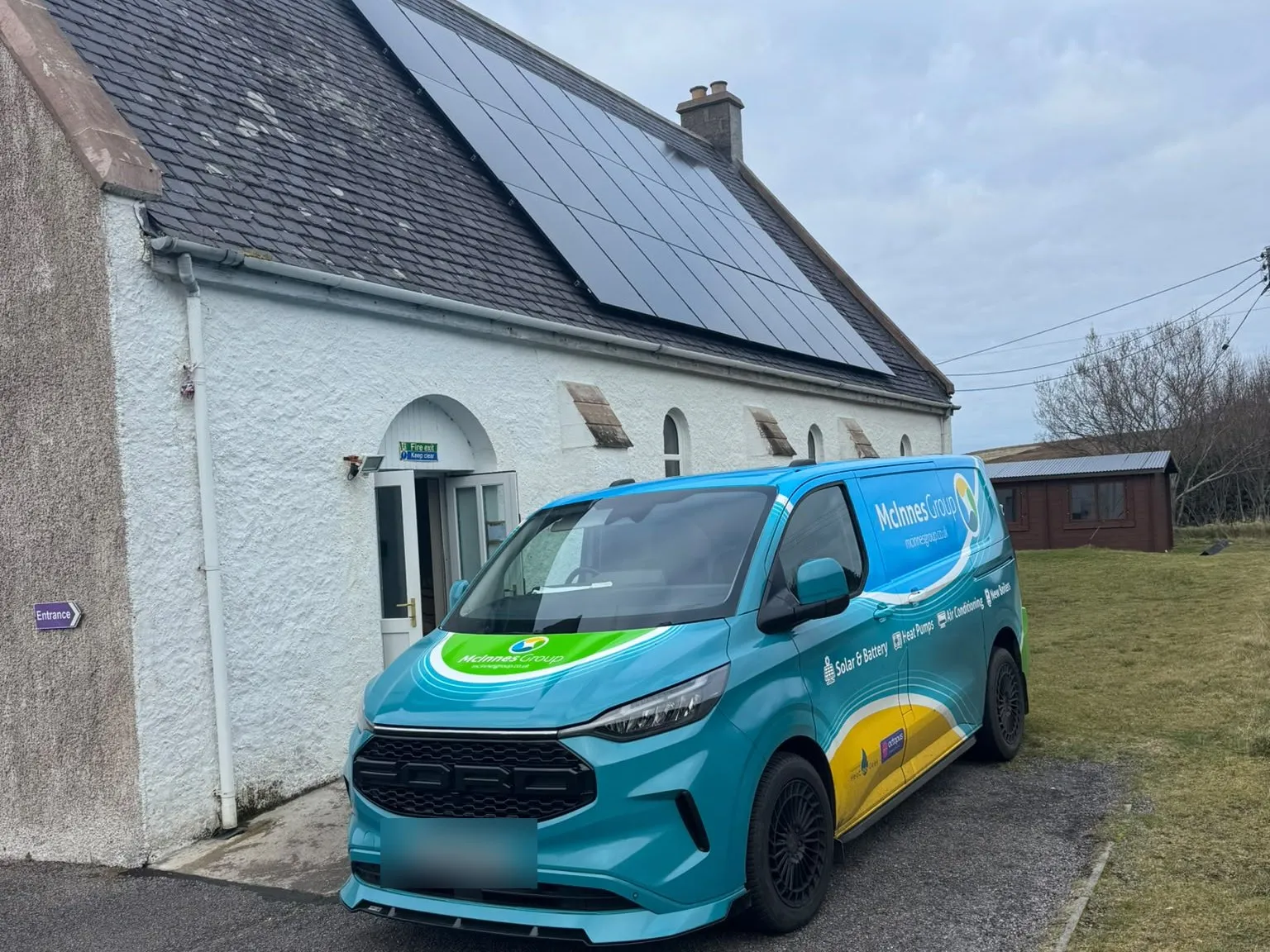
The building is a traditional single-storey kirk: white harled walls with sandstone quoins and buttresses, tall round-arched windows, a stone chimney at each gable and a steep slate roof. Inside, the main hall is one big open space with a timber-lined dado and exposed arched roof trusses. It is a lovely room, and a hard one to heat: high ceilings, a lot of glass, and the kind of stop-start use (a craft group one afternoon, an event the next) that means the heating has to work fast when it is switched on.
The hub's own plan was to make the building a warm, sustainable space for everyone for years to come, with insulation, new flooring and windows done alongside the heating and solar work.
The challenge
Fast heat for a big room, low running costs, and a long drive to site.
- A big, tall, intermittently used room. Radiators and a wet heating system would have been slow to respond and would have meant a lot of pipework through a handsome interior. The hub needed heat it could feel within minutes of switching on.
- Running costs. A community charity has to watch every bill. The brief was low running costs, not just low carbon.
- A remote site. Aultbea is roughly two hours from Inverness, so every visit had to count.
- Planning. Solar panels and outdoor units on a former church needed planning consent before anything went on the roof or the wall.
- A phased project. The hub first spoke to us about solar in 2024. The scope grew into solar plus battery storage, then the air-to-air heating, so the design had to work as one system even though it was bought in stages.
The heating
Two Mitsubishi Heavy Industries air-to-air units, working as a pair.
Air-to-air heating uses a heat pump to take warmth from the outside air and deliver it into the room as warm air, rather than heating water for radiators. It heats a space quickly, and the same units can cool it on a warm summer afternoon.
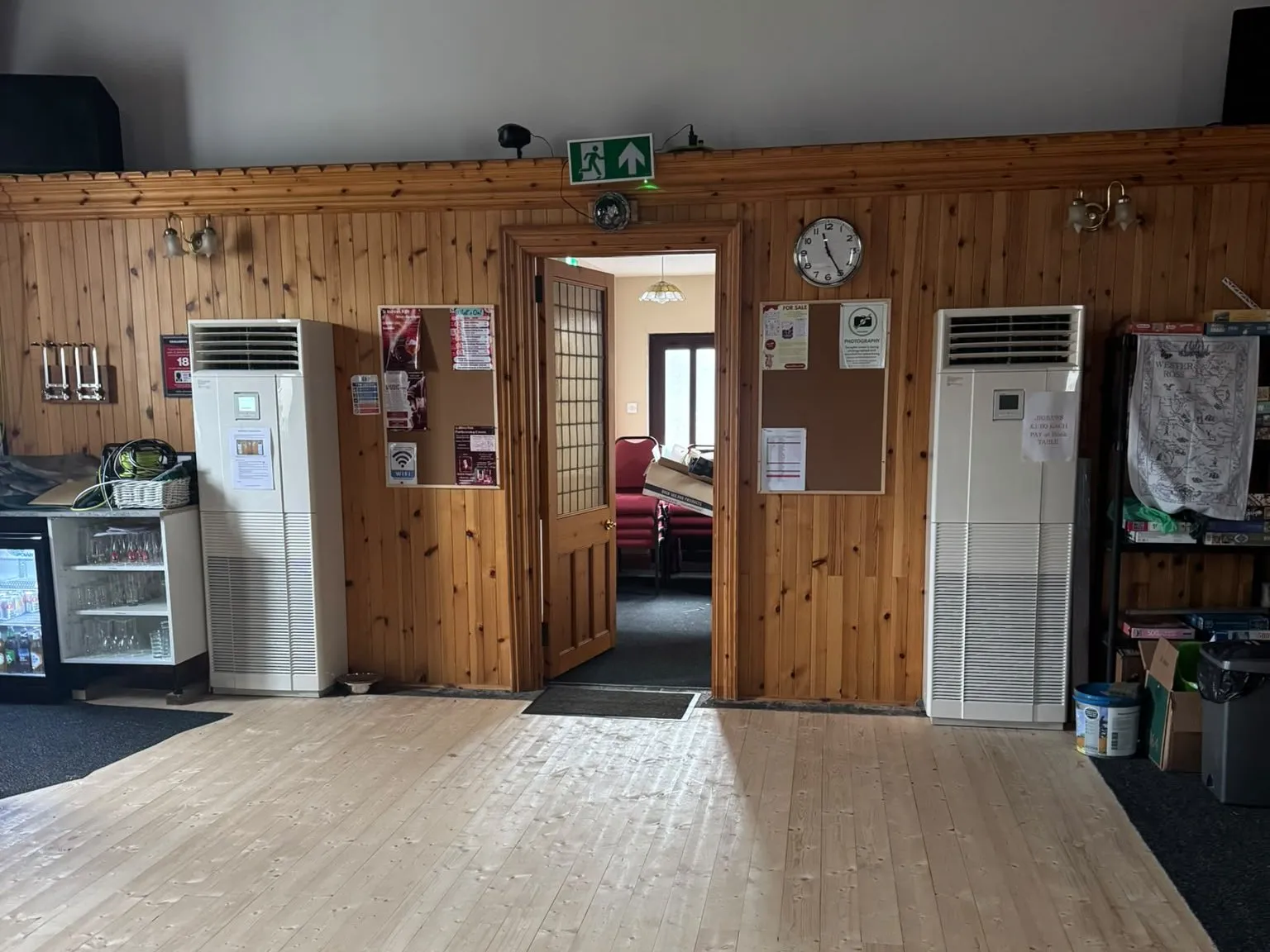
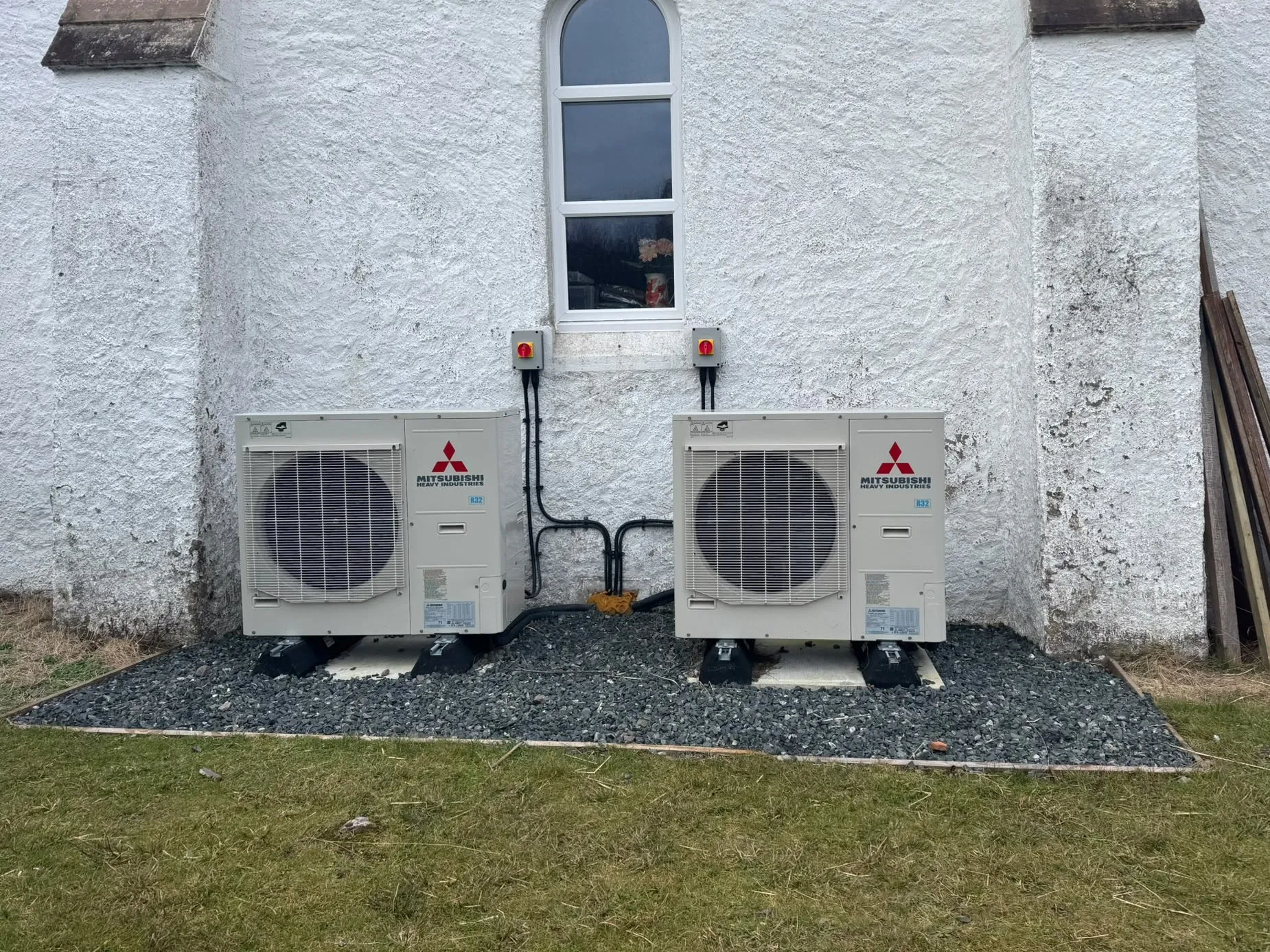
In the hall we fitted two Mitsubishi Heavy Industries FDF125 floor-standing indoor units, one at each end, each paired with its own FDC125 outdoor unit on R32 refrigerant. Each pair is rated at 14 kW of heating (manufacturer's nominal figure), so there is around 28 kW available across the hall when it is needed.
The two units are set up as a lead-and-follow pair. One indoor controller takes charge, brings the second unit in only when the hall needs the extra capacity, and then both ramp down to hold the temperature. On a cold morning the hall comes up to temperature quickly; once it is warm, one unit can often hold it on its own.
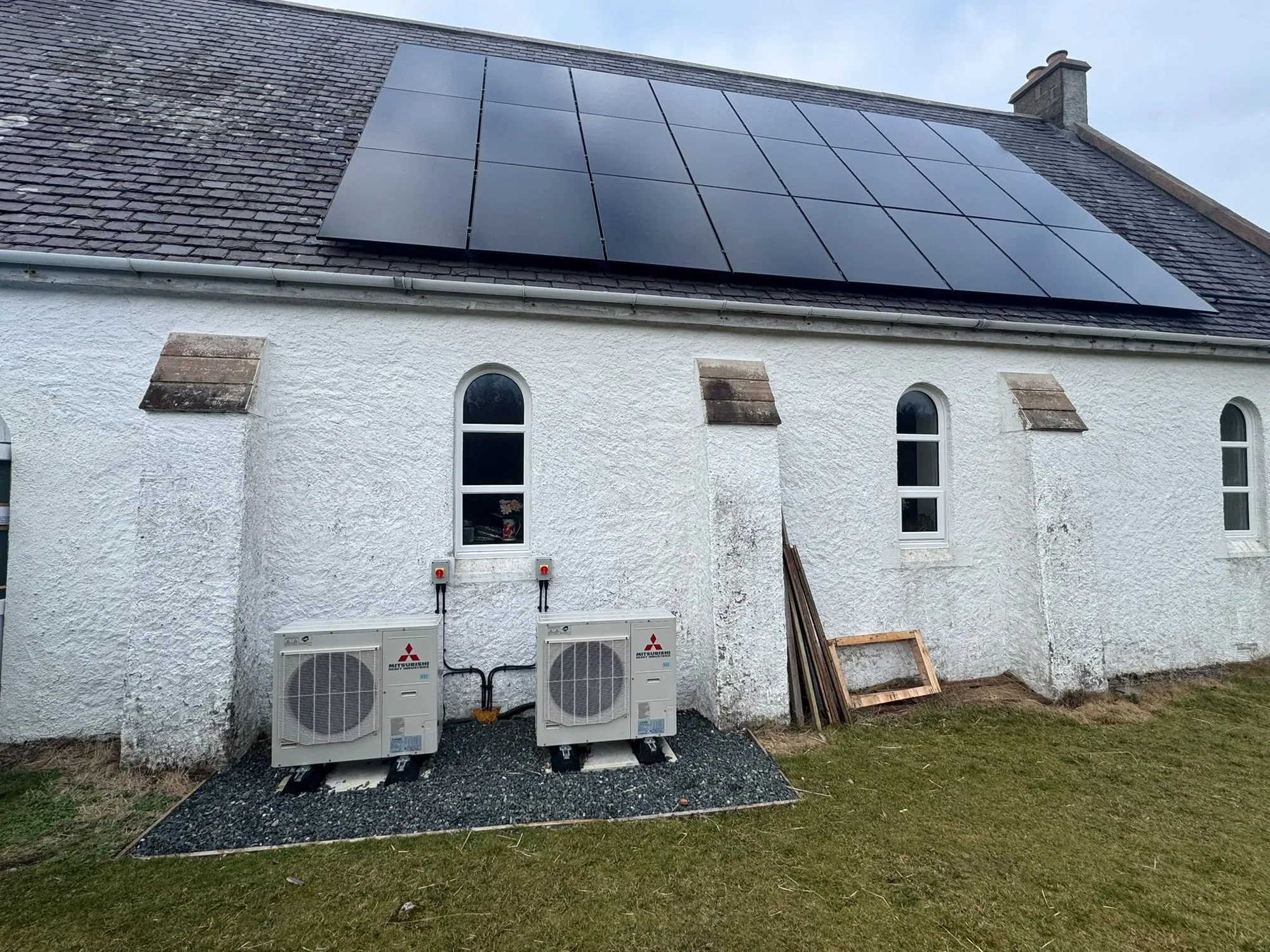
The outdoor units sit side by side on a timber-edged gravel pad below the first arched window, each with its own isolator, with the pipework and cabling run in external tray and trunking so nothing is chased into the old walls.
Solar and battery storage
24 panels and two independent battery systems.
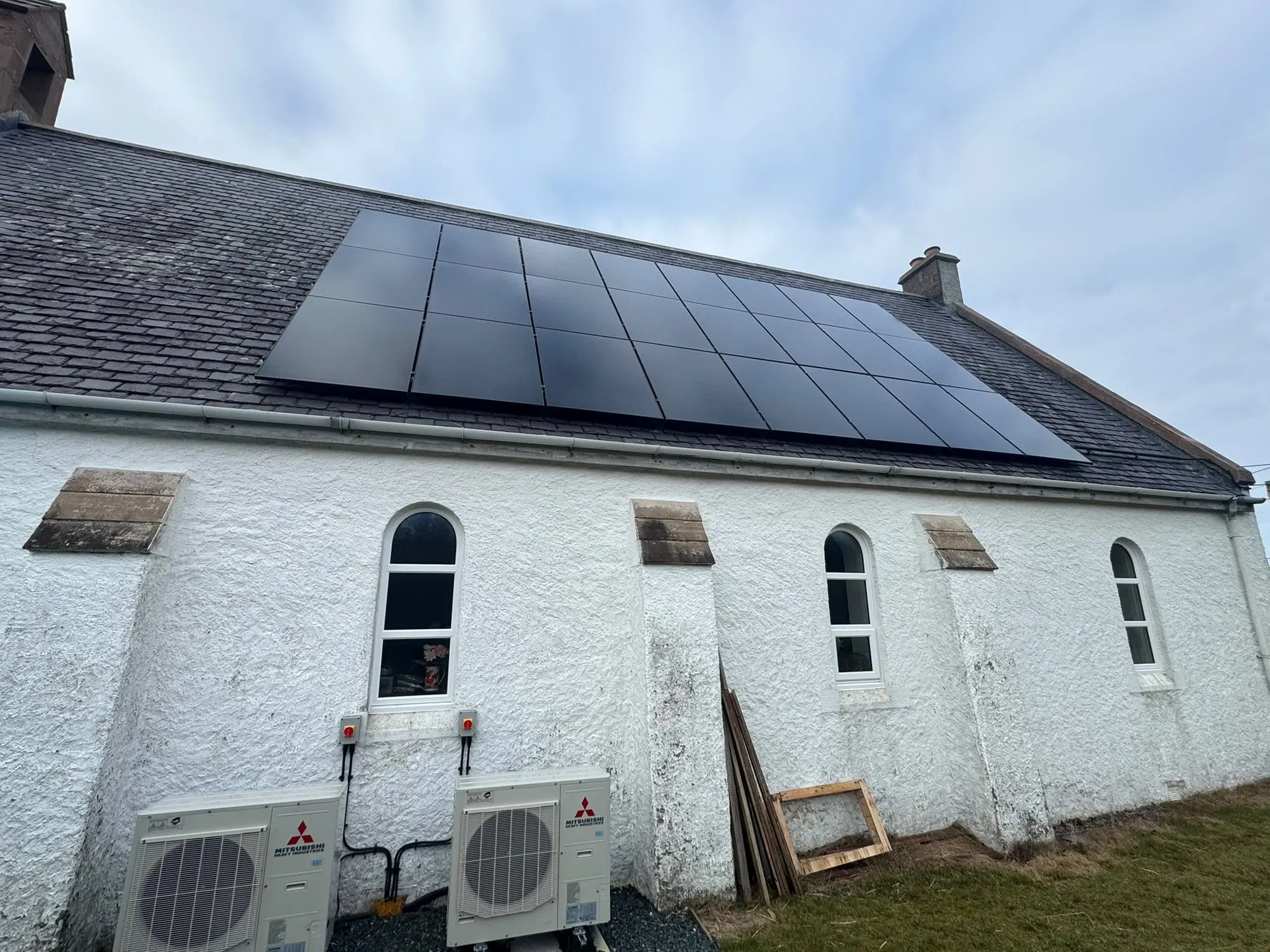
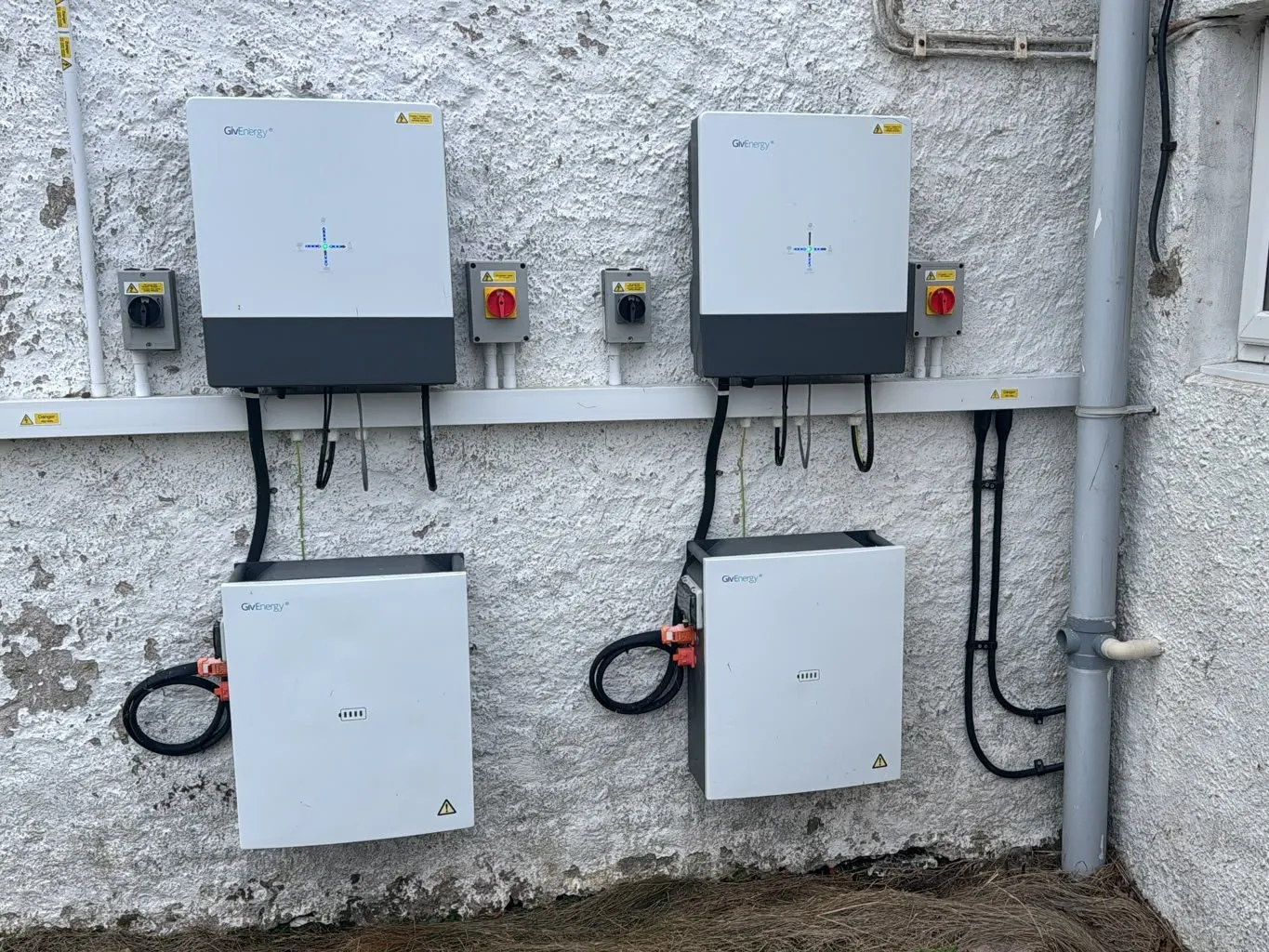
On the roof we fitted 24 all-black 450 W panels, 10.8 kWp in total, on a slate-roof mounting system. The array is split between two GivEnergy hybrid inverters, each with its own battery, so the hub has two separate solar-and-battery systems rather than one.
Both inverters sit on one GivEnergy account under the hub's own email address, so the committee can see each system or both together in one app, and the login passes from committee to committee rather than living on one person's phone. The batteries are set to top up from the grid on the hub's cheaper overnight tariff and run on solar and stored power through the day.
The installation is MCS-certified, with the full documentation and handover pack.
How the install went
Roof first, then a week of heating work in the middle of winter.
With planning in place, scaffold went up on two elevations and the panels went on in one block across the roof above the hall. The two inverters and batteries were mounted outside on the gable wall, with the isolators between them, so all the electrical kit is together and out of the hall.
The air-to-air system was fitted between 26 January and 2 February 2026, with the hall still in use around us. A craft group met in the room while the final checks were done.
Commissioning was done properly. When one unit was slow to join in on the first cold morning, our engineer was back on site the following Monday to set the lead-and-follow control up so the second unit cuts in when the first one calls for it. The batteries' charging schedule was set remotely to match the hub's off-peak hours, and the monitoring was moved onto the hub's shared email.
The hub reopened in early February 2026 with the new heating running, the solar and batteries live, and the committee able to see generation and battery charge from one app.
The result
A hall that heats quickly, holds its temperature and makes its own power.
- Fast, even warmth. The hall comes up to temperature quickly on a cold morning, and once it is warm one unit can usually hold it on its own.
- Its own electricity. Two independent solar-and-battery systems mean the hub generates and stores power on site, and can top the batteries up overnight on a cheaper tariff.
- Simple to run. One app and one login for the whole system, so volunteers can keep an eye on it without any technical knowledge.
- Summer too. The same units can cool the hall on a warm afternoon.
We will add generation and running-cost figures once the hub has a full year of metered data; any figure shown before then would be an estimate.
Why this matters
Village halls and churches are some of the hardest buildings to heat well.
Big volumes, high ceilings, lots of glass, and a pattern of use that is empty for days and then full for an evening. A wet heating system has to be run for hours to make a hall like this comfortable. Air-to-air heating turns that round: the room is warm in minutes, and the system idles back as soon as it gets there.
Pairing it with solar and battery storage means a good share of that electricity comes from the hub's own roof, and the batteries can carry cheaper overnight power into the day. For a community building run by volunteers, the other win is simplicity: one app, one login, and a system that looks after itself.
Looking after a community building?
See how we work with halls, churches and community groups.
From the first conversation to a system your committee can run, our commercial page explains how a community project runs with us.
Commercial overview →Get in touch
Tell us about your project.
We'll be in touch within one working day. No call-out fee, no obligation.
Thanks
We'll be in touch within one working day.
If it's urgent, call us on 01463 231 423 — Monday–Friday, 09:00–17:00.
Prefer to talk? Call 01463 231 423 or email info@mcinnesgroup.co.uk.